Lonehill

Karabo Molokomme • December 6, 2023

A Bold Step to Grade 1 

As the academic year ends, we proudly celebrated our Grade 0s who are poised to embark on a new adventure – transitioning to "big school" for Grade 1 in 2024. With the inspiring mantra, "Be bold, be courageous, and be your best," we marked this milestone not just as an academic achievement but as a reflection of the incredible growth and accomplishments these young students have experienced during their years at Pre-Primary.


Together with their parents, we celebrated as a Crawford family, wishing our Grade 0s the best of luck as they step into the Foundation phase. The Prep School awaits, promising a canvas for countless new and exciting memories. 

A large group of people are sitting in a room watching a presentation.

Annual Concert at PrePrimary 

November witnessed a week of joyous festivities in our Pre-Primary, culminating in the eagerly awaited annual concert. Aligned with the International Baccalaureate (IB) framework, this year's theme, the 'inquiry diary,' sparked a delightful collaboration of creativity. 


Parents were treated to unique interpretations from each grade, bringing the chosen Unit of Inquiry to life. The enthusiasm radiating from the little faces was infectious, as parents joined in the fun, emulating turtles, and immersing themselves in the celebration alongside their children. 


While the year-end concerts are a special time for parents to celebrate in the achievements of their little ones, they also play a crucial role in nurturing the confidence of our young Crawfordians. The experience encourages the development of a healthy self-esteem, emphasising the importance of collaboration with classmates and the value of working alongside friends. Each performance, while not without its imperfections, serves as a testament to the resilience and capabilities of our young Crawfordians, showcasing their true spirit and determination. These concerts are more than just a showcase; they are a celebration of growth, camaraderie, and the unique qualities that make each child exceptional. 


A group of people are posing for a picture in a classroom.
A group of children are holding candles in their hands

Grade 1 Re-Reg Winning Pool Party  

This was the most anticipated Pool Party for our lovely Grade 1C class. When they heard they had won the Pool Party they were ablaze, leaping and jumping around with a few air fist pumps! They rocked in their vibrant colourful costumes and couldn’t wait to leap into the pool. Eat Street had prepared yummy gift bags filled with a tasty slice of pizza, packet of chips and a cooldrink. To these little ones this was a feast fit for a King. They were the winners, and this was all that counted. The atmosphere was just fun, fun, fun all the way. 

A group of children are laying on the edge of a swimming pool.
A young boy wearing goggles is holding a slice of pizza

Junior and Senior Music Soirée  

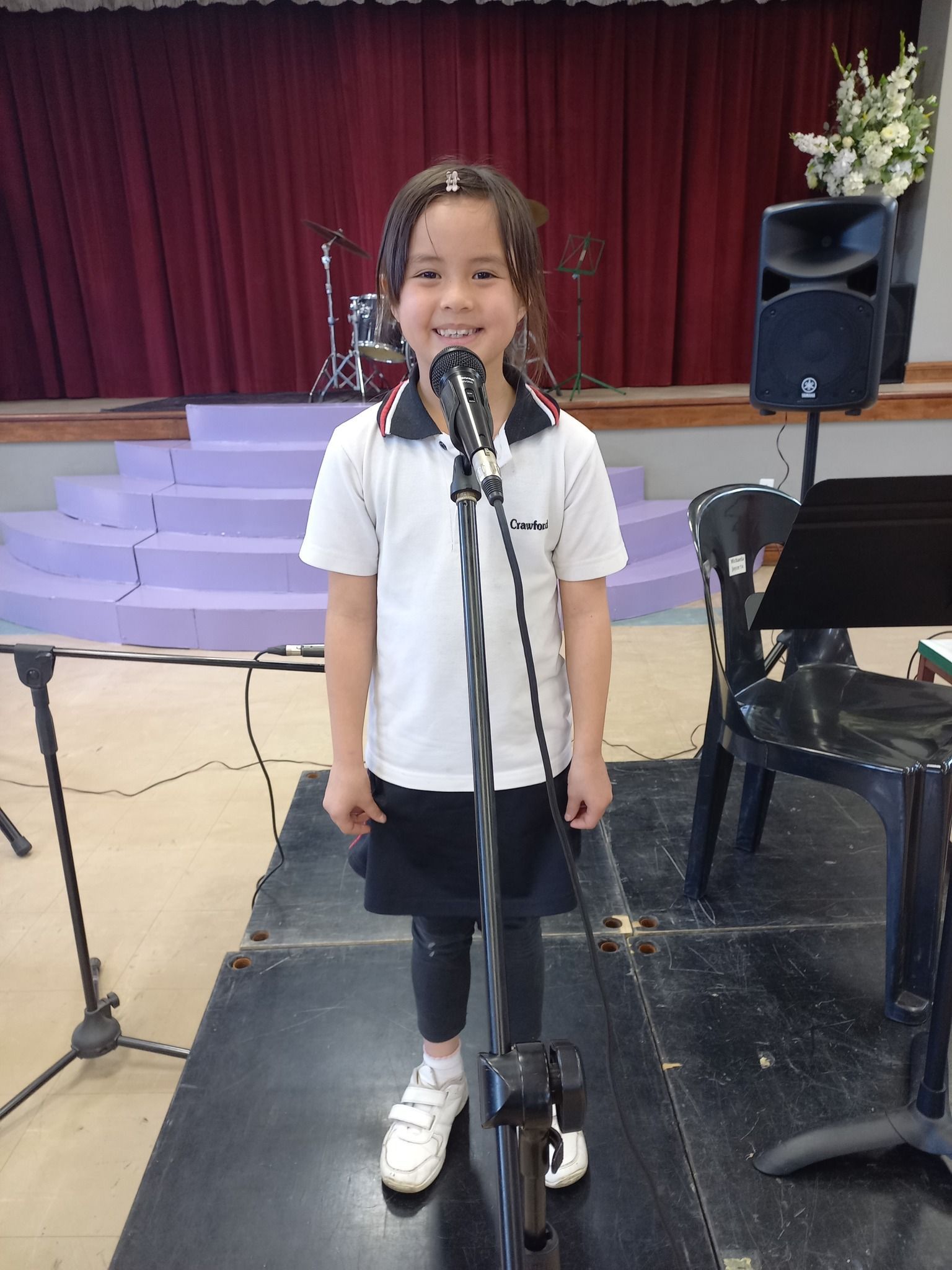
Crawford International Lonehill Preparatory Music Department students are given the opportunity to perform at their biannual music exhibitions.  These music exhibitions were established more than 20 years ago to give the top achieving students the opportunity to perform to a live audience.  Over the years, the Music Department has gone from strength to strength, so much so that the concerts had to be split into junior and senior evenings.  More than 180 learners are taught by the eight teachers of the Music Department, in nine instruments:  piano, electronic keyboard, voice, violin, guitar, ukulele, drums, flute and the recorder.  The music exhibitions are a vital part of developing performing skills in young students. The arts were especially hard-hit during Covid pandemic, and students lost out on opportunities to perform live. The learners also love the evening, to show their families how much they have progressed in their music.    

A man in a suit is playing a grand piano
A little girl is standing in front of a microphone

Crawford International Lonehill Matric Student Soars to New Heights 

At the tender age when most boys dream of becoming doctors or soccer stars, Ameer Buckus of Crawford International Lonehill had his eyes set on the skies—he dreamt of becoming a pilot. While many matric students are still pondering their post-school plans, Ameer has already achieved a significant life goal by obtaining his Private Pilot’s Licence. 


Ameer's journey began in late 2020 with an introductory flight at a Lanseria Airport-based flight school. He swiftly obtained his student licence and embarked on the challenging path to earning his PPL. Over the next year, he deftly balanced academics with aviation studies, completing eight written examinations and accumulating over 50 hours of flight time, including numerous solo flights. 


Despite the demands of his matric year, Ameer's commitment soared to new heights. He even secured his driver's licence to independently travel to the airport for additional flights between school days. With determination and focus, Ameer successfully completed the final practical and oral examinations, earning his PPL with flying colours in October. Congratulations, Ameer—an excellent conclusion to Crawford Lonehill’s Matric class of 2023's theme of "Saints and Angels." 


Reflecting on his accomplishment, Ameer shares, "It feels incredibly rewarding to have achieved my pilot's license while managing my studies during my matric year. It was definitely a challenging yet fulfilling journey, a testament to hard work, determination, and the support I received along the way." 


Beyond the accolades, Ameer expresses the sheer joy of piloting—an unmatched feeling of freedom and adventure. "Every flight is a new challenge, requiring a blend of technical skill, quick decision-making, and a deep understanding of the elements. It's not just a career or a hobby; it's a passion that continuously fuels my love for aviation." 


Offering advice to fellow matriculants, Ameer emphasises embracing dreams wholeheartedly, juggling multiple interests, effective time management, and surrounding oneself with supportive individuals. He highlights the importance of perseverance and belief in oneself, acknowledging that setbacks are valuable lessons that contribute to personal and professional growth. 


To all matric students pursuing diverse dreams, Ameer encourages perseverance: "Remember that setbacks don't define your journey; they are lessons that shape you. Keep pushing forward, stay determined, and believe in your ability to overcome obstacles on the path to achieving your dreams.” 


A man in a pilot uniform is standing in front of a wall.
A man wearing sunglasses and a headset is flying a plane


ROTARY CLUB OF SANDTON: 2023 POETRY COMPETITION 


A number of our students again entered the Rotary Club of Sandton’s Poetry Writing Competition. The topic was “Unite for Wildlife: A Shared Responsibility” which was inspired by Rotary’s partnership with the SANParks K9 Anti-Poaching Unit and their mission to preserve African wildlife.  


We are very proud of Tshiamo Monama who was placed second in the Grade 8 – 11 category for her poem “Honeycombs” and Alexander Govender who was placed first in this category for his poem “Dead Animals”. We congratulate these two students who are avid poets!  


This competition is incredibly valuable because by engaging in the art of poetry, our students are not only encouraged to tap into their imaginations but also delve into profound themes and share their unique perspectives.   


A woman wearing glasses and a suit smiles for the camera
A man in a white shirt is standing in front of a bush with pink flowers.

Preparatory 1 article pre-primary (CSI pre-primary) 

Daily Bread Org 


Every Friday we alternate between grades in bringing sandwiches, fruit and Oros for Daily Bread. Our students who have continued Acts of Kindness, by supporting the Daily Bread Organisation help feed needy children at the Buya Creche in Msawawa, Kya Sands. The students pack an extra sandwich and fruit for a Friday, which helps to feed about 80 hungry children. “Mix and drink’ juices like ‘Oros’ are included. 


The Daily Bread Org renders the following services to orphaned and vulnerable children:
• Counselling
• Psycho-social support for orphaned and vulnerable children
• Drop-in centre services for people in need
• A place of safety and a children’s home for children in need of care
• Outreach and education 

The organisation also assists victims and survivors of domestic violence. They make sure no child is without a plate of food at school within the area. 


Crawford Lonehill Prep is proud to support https://www.facebook.com/dailybreadcharity.org/ 


A white van is parked in a parking lot.
July 24, 2026
Helping Your Child Transition Back to School After the Holidays The end of the school holidays often brings a mix of emotions for both children and parents. While many students look forward to seeing their friends and teachers again, others may feel nervous about returning to routines, new classrooms or the challenges of a new term. A smooth transition back to school doesn't happen overnight. With a little preparation and a positive approach, families can help children return feeling confident, organised and ready to learn. The key is to focus on creating healthy routines, encouraging open conversations and making the first few days back feel exciting rather than overwhelming. Re-establish a School Routine Before the First Day One of the easiest ways to prepare your child for the new school term is to begin reintroducing their school routine a few days before classes resume. Gradually adjust bedtimes and morning wake-up times to match the school schedule. This gives children time to reset their body clocks, making those early mornings much easier when the term begins. You can also use this time to prepare school uniforms, organise stationery and pack school bags together. These small tasks help children feel organised and reduce first-day stress. Talk Positively About Returning to School Children often take emotional cues from the adults around them. Speaking positively about the new school term can help build excitement and confidence. Ask your child what they are looking forward to. It could be seeing friends, participating in sport, joining a cultural activity or learning something new. If they have concerns, listen without dismissing their feelings and reassure them that it's normal to feel a little uncertain after a long break. Simple conversations can go a long way in helping children feel emotionally prepared for the transition back to school. Encourage Healthy Habits Returning to school is a great opportunity to re-establish healthy daily habits that support learning and wellbeing. Encourage regular meals, enough sleep, daily movement and balanced screen time. These habits not only support physical health but also improve concentration, energy levels and overall readiness for the classroom. Children thrive when they have a consistent routine that balances learning, rest and play. Help Your Child Set Small Goals A new school term offers a fresh start. Encourage your child to think about one or two realistic goals they would like to achieve. These goals don't have to be purely academic. They could include improving time management, participating more in class, joining a new activity, reading more often or simply becoming more organised. Focusing on small, achievable goals helps children build confidence and creates a sense of purpose for the weeks ahead. Stay Connected with Your Child's School A successful school experience is built on a strong partnership between home and school. Taking an active interest in your child's learning helps them feel supported and reinforces the importance of education. Regular communication with teachers, attending school events and checking in with your child about their day all contribute to a positive learning experience. Even simple questions such as "What was the best part of your day?" can encourage meaningful conversations about school. Be Patient During the Adjustment Period Not every child settles back into routine immediately. Some may be tired during the first week, while others may need extra reassurance as they adjust to classroom expectations again. Be patient and celebrate the small wins. Whether it's waking up on time, completing homework independently or returning home with a positive story about their day, these moments all contribute to a successful transition. Remember that confidence grows through encouragement, consistency and support. Key Takeaways Begin preparing for the new school term a few days before school starts. Re-establish healthy sleep, morning and after-school routines. Talk positively about returning to school and encourage open conversations. Support your child's wellbeing through healthy habits and balanced routines. Help your child set small, achievable goals for the new term. Build a strong partnership with your child's school. Be patient as children adjust and celebrate their progress along the way.  Returning to school marks the beginning of another exciting chapter of learning and growth. By creating positive routines, encouraging confidence and supporting your child's wellbeing, parents can help make the transition back to school a positive experience for the whole family.
July 17, 2026
How College Students Can Make the Most of the School Holidays For College students, the school holidays are more than just a pause between terms. They are a chance to rest, reset and spend time on the things that often get pushed aside during a busy school schedule. Between academics, sport, cultural activities, friendships, leadership responsibilities and future planning, the school term can move quickly. The holidays offer students time to slow down, reconnect with themselves and return to school feeling more focused. Making the most of the holidays does not mean filling every day with revision or activities. It means finding a healthy balance between rest, enjoyment, responsibility and small steps that support personal growth. Use the Break to Properly Recharge Rest is one of the most important parts of the holidays. After a demanding term, students need time to sleep, relax and step away from constant deadlines. This may mean having a few slower mornings, spending time with friends, watching a favourite series, listening to music, reading, exercising or simply doing very little for a while. The key is to rest in a way that actually feels refreshing. Too many late nights, endless scrolling or irregular routines can sometimes leave students feeling more tired than before. A good holiday should help students feel recharged, not drained. Keep a Little Structure Without Overplanning The holidays should feel different from school, but some structure can make the break more enjoyable. Without it, days can start to blur together and it becomes easy to lose motivation. Students can create a simple rhythm that works for them. This might include time for rest, seeing friends, exercising, helping at home, enjoying hobbies and doing any schoolwork that needs to be completed. This does not need to be a strict timetable. Even choosing one or two things to do each day can create a sense of purpose while still leaving plenty of room for downtime. Stay Connected to Learning in a Low-Pressure Way The holidays are not meant to become another school term. However, staying lightly connected to learning can help students return with more confidence. This could mean finishing assigned holiday work early, reviewing a subject that felt difficult, organising notes, reading something interesting or setting a small goal for the next term. For senior students, the holidays can also be a good time to think about future pathways. Exploring study options, careers, personal interests or skills can help students feel more prepared without making the break feel academic. Use Technology with Intention Technology is part of everyday life, especially for College students. The focus should be on helping them build a responsible, intentional relationship with it. Used well, technology can best support learning, connect with friends, watch useful content, research future opportunities or create something original. Recent research has drawn attention to the long-term effects that constant device use can have on young people. Parents have an important duty to play here too, by staying aware of this research and helping set sensible limits around use at home. Taking regular breaks from devices, spending time outdoors and being present with family or friends can help create a healthier balance. Make Time for Movement and Wellbeing Physical activity is one of the simplest ways to support wellbeing during the holidays. It helps with energy, sleep, mood and focus. This does not have to mean formal sport or intense training. Walking, gym, running, swimming, cycling, dancing, hiking or playing sport with friends can all help students stay active. Wellbeing also includes sleep, nutrition, social connection and time away from pressure. The holidays are a good opportunity for students to check in with how they are feeling and reset healthy habits. Explore Interests Beyond the Classroom During the term, students may not always have time to focus on their own interests. The holidays can create space to explore what excites them outside of the classroom. This could include music, art, photography, design, coding, sport, volunteering, writing, entrepreneurship, cooking, reading or learning a new practical skill. These activities are not just ways to stay busy. They help students build confidence, discover strengths and develop a stronger sense of who they are becoming. Take Responsibility in Small Ways Independence grows through everyday responsibility. The holidays are a good time for students to practise managing their time, planning ahead and contributing at home. This might include organising their room, helping with meals, managing their own school preparation, budgeting for outings, planning transport or taking responsibility for completing holiday tasks without being reminded. These small actions help students build habits that will support them beyond school. Ease Back into the New Term A few days before school starts, it helps to gently shift back into routine. Students can check their school materials, complete any final tasks, review important dates and adjust sleep patterns. This is also a good time to set one or two realistic goals. These could be academic, personal, social or linked to sport, culture or leadership. Starting the term with a clear mind and a little preparation can help students feel more confident and in control. Key Takeaways The holidays are a time to rest, reset and reconnect. Students do not need a strict timetable, but some structure can help. Light learning or preparation can make the return to school smoother. Technology should be balanced with movement, hobbies and real connection. Exploring interests outside the classroom supports confidence and personal growth. Small responsibilities help students build independence. A calm return to routine can help students start the next term well. School holidays are a valuable opportunity for College students to pause, reflect and grow. With the right balance of rest, freedom and purpose, students can return to school feeling refreshed, motivated and ready for what comes next.
July 10, 2026
School holidays are an important time for children to rest, play and enjoy a break from their usual routine. After a busy term, children need time to recharge, spend time with family and enjoy the freedom of slower days. At the same time, many parents know that holidays can quickly become challenging when children are restless, bored or spending more time on screens than planned. The goal is not to fill every hour with structured activities. Instead, school holidays can offer a healthy balance of rest, play, creativity, movement and simple learning moments. For Pre-Primary and Prep children, the best activities are often the ones that feel fun, natural and easy to enjoy at home. Keep a Gentle Holiday Routine Children often feel more settled when they know what to expect. A holiday routine does not need to be strict, but a simple rhythm can help the day feel calmer. Parents can include: A regular wake-up and bedtime range Time for outdoor play Creative activities Quiet reading or rest time Limited screen time Small responsibilities at home Family time in the evening This gives children enough structure to feel secure, while still allowing space for holiday fun. Encourage Learning Through Play Younger children learn best through play. Through everyday play, they practise communication, imagination, problem-solving and independence. Simple holiday play ideas include: Building with blocks, boxes or cushions Playing dress-up Creating a pretend shop or restaurant Doing puzzles Playing matching or memory games Using playdough or clay Making an indoor obstacle course Playing board games or card games These activities keep children engaged without making the holidays feel like schoolwork. Make Reading Feel Relaxed The holidays are a good time to encourage reading in a calm and enjoyable way. Reading supports vocabulary, imagination and concentration, but it should not feel like a task. For Pre-Primary children, parents can read aloud, look at picture books together and ask simple questions about the story. For Prep children, allow them to choose books that interest them, whether that is storybooks, comics, fact books or magazines. Even 15 minutes of reading a day can help children stay connected to language and learning during the holidays. Get Creative at Home Creative activities are a simple way to keep children busy while encouraging imagination and focus. Parents can try: Drawing, painting or colouring Making cards for family members Baking simple recipes together Creating a holiday scrapbook Making puppets and putting on a show Building with recycled materials Designing a treasure map The focus should not be on perfection. What matters most is that children are exploring, creating and enjoying the process. Keep Children Moving Movement is especially important for younger children. It supports their physical development, mood, sleep and concentration. Easy ways to keep children active include: Playing outside Going for a family walk Riding a bicycle or scooter Dancing to music Playing ball games Swimming, where safe and supervised Visiting a park Movement does not need to be formal. The aim is simply to help children use their energy in a healthy and enjoyable way. Build Independence Through Small Responsibilities School holidays are a good opportunity to help children practise small responsibilities without the rush of the school morning. Younger children can help with: Packing away toys Making their bed Helping set the table Watering plants Feeding pets with supervision Organising books or stationery These small tasks help children feel capable and trusted. Over time, they support confidence and independence. Set Healthy Screen Time Boundaries Screens can be part of the holidays, but they should not become the main activity of the day. Clear boundaries help children understand when and how screens can be used. Parents may choose to allow screen time after reading, outdoor play or tidying up. Families can also keep mealtimes and bedtime screen-free. It can help to create a simple holiday activity list so children have options before turning to a device. Prepare Gently for the New Term As the holidays come to an end, children may need help adjusting back into routine. A few days before school starts, parents can begin moving bedtime closer to the usual school schedule, preparing uniforms and school bags, and speaking positively about the term ahead. For younger children, reassurance makes a big difference. A calm return to routine can help them feel ready and confident for the new term. Key Takeaways School holidays should include both rest and meaningful activity. Pre-Primary and Prep children learn through play, movement, creativity and conversation. A gentle routine helps children feel settled. Reading, creative activities and outdoor play support development. Small responsibilities help children build confidence and independence. Clear screen time boundaries create a healthier holiday rhythm. Preparing gradually for the new term can make the return to school easier. School holidays are a valuable opportunity for children to rest, explore and reconnect. With a simple balance of structure and freedom, parents can help younger children enjoy their break while continuing to build curiosity, confidence and independence.
July 1, 2026
Southdowns College to become Crawford International Southdowns Southdowns College will become Crawford International Southdowns from 1 January 2027 , bringing together two education names with a shared commitment to academic excellence, student development and future-focused learning. Southdowns College has built a strong reputation in Centurion for academic performance, a high-expectation learning environment, and a school culture that encourages students to grow in confidence, discipline, and purpose. The school’s Class of 2025 achieved a 100% pass rate, a 96.33% Bachelor’s Degree pass rate and 182 distinctions. Crawford International is recognised for nurturing students who are academically prepared, globally aware and confident in their ability to contribute beyond school. The Crawford International Class of 2025 achieved 1,428 distinctions across the group, averaging 2.7 per candidate. The move to Crawford International Southdowns strengthens the school’s value proposition by combining Southdowns’ established academic culture and community roots with Crawford International’s global outlook, future-focused learning approach, and leadership development focus. Students will continue to follow the IEB curriculum, supported by the same teaching teams and school leadership. The transition will be phased to ensure continuity for students, families, and staff, while gradually introducing the Crawford International identity on campus. Crawford International Southdowns will continue to serve families in Centurion with a strong academic offering, a commitment to holistic student development and a clear focus on preparing students for life beyond school.
June 26, 2026
Parent-teacher meetings are among the most valuable opportunities to support your child's education. They offer insight into academic progress, classroom behaviour, social development, and overall wellbeing. Yet many parents arrive without a clear idea of what they want to ask, leaving the conversation feeling rushed or incomplete.  Preparing a few thoughtful questions beforehand can help you gain a clearer understanding of your child's strengths, challenges, and next steps. This guide expands on our previous advice and shares 12 practical questions every parent should consider asking before their next parent-teacher meeting. Why Preparation Makes All the Difference The most productive parent-teacher meetings are conversations, not one-way updates. While teachers provide valuable insight into your child's experience at school, parents offer equally important perspectives from home. Taking a few minutes to prepare beforehand helps you guide the discussion towards the areas that matter most. Writing your questions down ensures nothing is forgotten, even if time is limited. If you're new to school life, you may also find a guide for first-time school parents helpful as you navigate your child's educational journey. Before the Meeting: What to Do at Home Review your child's most recent report, assessments, or feedback. Think about any recent changes in their mood, confidence, or attitude towards school. Ask your child if there is anything they would like you to discuss with their teacher. Write your questions down before the meeting. Remember that meeting times are often short, so focus on the topics that matter most. 12 Questions Every Parent Should Ask at a Parent-Teacher Meeting The following questions can help guide a meaningful conversation and leave you with practical next steps to support your child's success. Academic Progress and Performance 1. Is my child working at the expected level for their age and grade? This provides an overall picture of academic progress. Listen for whether your child is meeting, exceeding, or working towards expected outcomes. 2. Which subjects are they strongest in, and where do they need the most support? Understanding both strengths and challenges allows you to encourage continued growth while supporting areas that need additional attention. 3. How does my child approach assessments? Do they prepare well and manage pressure? Success is influenced by more than knowledge alone. Ask about preparation, organisation, confidence, and how your child responds during assessments. 4. Are there any gaps in foundational skills that could affect future learning? Small gaps can become bigger challenges over time. Identifying them early allows parents and teachers to work together before they impact future progress. Behaviour, Effort, and Classroom Engagement 5. How does my child participate during lessons? Find out whether they ask questions, contribute to discussions, remain focused, and engage confidently with classroom activities. 6. Are there any behavioural patterns I should know about? Teachers may notice behaviours that are different from those seen at home. Understanding both positive habits and areas for improvement creates a fuller picture. 7. How does my child respond to feedback or correction? Learning how your child accepts guidance helps build resilience and a positive attitude towards continuous improvement. 8. Does my child persevere when work becomes challenging? Resilience is an important life skill. Ask whether your child keeps trying when tasks become difficult or tends to give up too quickly. Social Wellbeing and Relationships Social wellbeing plays a significant role in both emotional health and academic success. 9. How does my child interact with their peers? Ask whether they have positive friendships, collaborate well with classmates, and feel included within the classroom community. 10. Have you noticed any signs of social difficulty, conflict, or exclusion? Early conversations about friendship challenges can help address concerns before they affect your child's confidence or learning experience. Support, Next Steps, and How Parents Can Help 11. What is one thing I can do at home to support my child right now? Teachers often have simple, practical suggestions that can make a meaningful difference between school and home. 12. If my child needs additional academic or emotional support, what does that process look like? Understanding the school's support structures ensures you know what help is available if needed. Learn more about Crawford's approach to academic support and how we help every student reach their potential. What to Do After the Meeting Once the meeting is over: Write down the key discussion points while they are still fresh. Share the feedback with your child in an encouraging and age-appropriate way. Follow up with the teacher if any questions remain unanswered. Arrange another check-in if ongoing support or monitoring is needed. Remember that a parent-teacher meeting is the start of an ongoing conversation, not the end of one. Making the Most of Your School Partnership Strong partnerships between home and school are built through consistent communication, shared goals, and mutual trust. Parent-teacher meetings are just one opportunity to work together in supporting your child's development. Staying engaged throughout the year helps create the best possible learning experience. If you're exploring educational options, our guide to choosing the right school offers practical advice on what to look for when selecting a private school. Key Takeaways Preparation helps you make the most of every parent-teacher meeting. Arriving with written questions leads to more focused, meaningful conversations. The most valuable discussions cover academic progress, classroom engagement, behaviour, social wellbeing, and next steps. Parent-teacher meetings work best when they result in practical actions both at school and at home. Engaged, informed parents play one of the most important roles in supporting a child's long-term educational success.
Crawford International poster with red title: “How to Build a Mid-Year Exam Revision Timetable (Grade 8-12)”
June 19, 2026
Create a realistic mid-year exam revision timetable for Grades 8–12. Learn how to plan your study time, stay organised, and revise with confidence.
June 12, 2026
When Leah Mari matriculated from Crawford International La Lucia College in 2019, she already had a passion for music, performance and storytelling. Today, she is one of South Africa's most exciting young performers, building an impressive career across musical theatre, film and music. A graduate of the Luitingh Alexander Musical Theatre Academy (LAMTA) in Cape Town, Leah has quickly earned recognition for her talent and dedication. Following her graduation at the academy, she received a nomination for the Fleur du Cap Theatre Award for Most Promising Student in 2024, highlighting her emergence as a rising star in the performing arts industry. Born and raised in Durban, Leah's creative journey began long before she stepped onto professional stages. A singer, pianist and emerging composer, she recorded her first EP whilst doing Grade 9 in 2016 and was a member and soloist of the KwaZulu-Natal Youth Choir. In 2019, she was awarded the prestigious DALRO ACT Scholarship, further supporting her pursuit of a career in the arts. In 2021, Leah was one of two winners of the national Cabaret and Beyond Songwriting Festival. The achievement led to the creation of her original one-act musical, Call Me A Fool, which was produced in association with The Centre for Creative Arts and staged in both Gqeberha and Durban in 2022 under the direction of Steven Stead. A second production followed later that year in collaboration with LAMTA. During her studies, Leah performed in a number of theatre and musical theatre productions at Theatre on the Bay and Pieter Toerien's Montecasino Theatre. Her credits included roles in Mephisto, The Seagull and Cosi, as well as several original South African productions including All Together Now, Come Together and Being Steve. Leah made her professional debut as the alternate Maria in Pieter Toerien and Cape Town Opera's production of The Sound of Music in 2023 and 2024. She followed this with a role in the South African premiere of Stephen Sondheim's Company in 2024. Her breakthrough came when she was cast as Eliza Doolittle in My Fair Lady. Her acclaimed performance earned her both a Fleur du Cap Theatre Award and a Naledi Theatre Award for Best Performance by a Lead Actress in a Musical, cementing her place as one of the country's leading young musical theatre performers. In 2025, Leah expanded her career into film, making her feature film debut as Meera in Lucky Fish. She also appeared in several short films, including Gangsters Tea and At Horizon's End, showcasing her versatility as a performer across different mediums. Most recently, audiences have seen Leah on stage in Chicago: The Musical and Pretty Woman: The Musical. It has also been announced that she will take on the role of Sophie Sheridan in the highly anticipated return of MAMMA MIA!, adding another iconic character to her growing list of achievements. Leah’s journey from Crawford International La Lucia College to award-winning performer highlights how Crawford empowers global leaders to thrive on the world stage. Her success continues to inspire current Crawford students to pursue their ambitions with confidence and creativity. As her career continues to flourish on stages and screens locally and internationally, Leah remains a shining example of what can be achieved when talent is nurtured and dreams are pursued with determination.
Crawford International title slide:
June 5, 2026
Learn what executive function skills are, why they matter in primary school, and how parents can help children build organisation, focus, memory, and self-control.
May 29, 2026
25 years of science, curiosity and community Fromplant physiology to the physics classroom, a career built on wonder. From the laboratory to the classroom After completing a master’s degree in Plant Physiology and Biochemistry from the University of KwaZulu Natal in 1990, a six-month lecturing stint quickly gave way to an unexpected opportunity: Ms Visser, a locum teaching position at George Campbell Technical High School. It turned out to be a defining moment. Recognising that teaching was a true calling, a Diploma in Higher Education from UNISA followed in 1995, formalising a commitment to the profession. A family connection to Crawford International La Lucia January 2000 marked the beginning of an extraordinary chapter at Crawford International La Lucia, joining the school the same month that the oldest of two sons started Grade 000. Both boys went on to complete their full 15 years of schooling at the school, a journey their father witnessed firsthand from the other side of the classroom. “Both our sons completed 15 years of schooling at Crawford International La Lucia, and they are truly grateful for the opportunity to have attended this incredible school.” Subjects and philosophy Over the years, Physical Sciences, Life Sciences, Technology and Further Studies Physics have all featured in her timetable. Across every subject, the goal has remained constant: to develop independent thinkers and well-balanced individuals with a natural curiosity and wonder for the world around them. What makes Crawford International La Lucia special The classroom has been the source of some of the happiest memories, with the energy students bring, their genuine interest, and their willingness to contribute meaningfully to every lesson. Equally treasured are the colleagues encountered along the way: dedicated, talented professionals whom it has been a privilege to work alongside, many of whom have become lasting friends. She says, “I love the energy and interest that our students display and their willingness to contribute meaningfully to lessons.” Looking back on more than two decades at Crawford International La Lucia, the years have been fun-filled, busy and deeply rewarding, a proud part of the school’s history. Fun Facts At Crawford International La Lucia since: January 2000 Qualifications: MSc Plant Physiology & Biochemistry (UKZN), Diploma in Higher Education (UNISA) Subjects taught: Physical Sciences, Life Sciences, Technology, Further Studies Physics Teaching philosophy: Independent thinkers with a natural curiosity for the world
May 22, 2026
When Rafie Mehrji Manshadi walked out of Crawford International College Sandton in 2018 with seven distinctions and his Student Prefect badge, he had no conventional road map for what came next. Today, he is a certified AI specialist, enterprise consultant, and co-founder of Angel Enterprise - a multi-division business ecosystem spanning AI consulting, creative design, hospitality, promotions, and education. His journey has been anything but linear. After matriculating at Crawford, Rafie pursued a Bachelor of Optometry at the University of Johannesburg, completing his degree in 2023. But throughout those four years, one thing never left him: a deep fascination with technology and artificial intelligence. Where others saw a completed degree as a destination, Rafie saw a crossroads. He made the bold decision to step away from optometry entirely and pursue the field that had always captivated him most. "It was a challenge to deal with the fact that I spent four years studying and then completely changed direction," he reflects. "But I was never happy with the conventional path - study, get a degree, get a job. I knew I didn't want to be an employee. I wanted to build something." And build he did. At the heart of Angel Enterprise sits Angel Intelligence, Rafie's primary focus - helping organisations move from AI experimentation to genuine, measurable impact through consulting, workflow automation, and AI system engineering. Beyond that, the broader ecosystem delivers branding, hospitality staffing, promotional services, and structured AI education programmes, all operating under one cohesive vision. Holding certifications from the Dubai Centre for AI, IBM, Anthropic, and Yale University, Rafie brings rare technical depth to a field reshaping every industry. His Crawford years, he says, gave him something no curriculum can fully teach. "Crawford showed me how to be myself - and that if I don't see a path for me, I should create my own." That instinct - to build rather than follow - is precisely what Crawford has always nurtured. And in Rafie Mehrji Manshadi, Sandton College has an alumnus who embodies it completely.
Show More